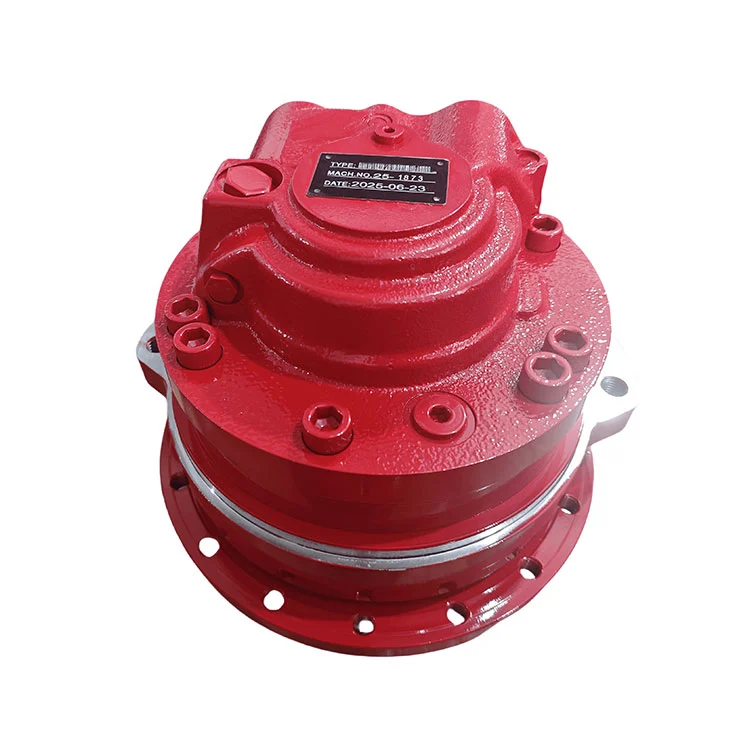
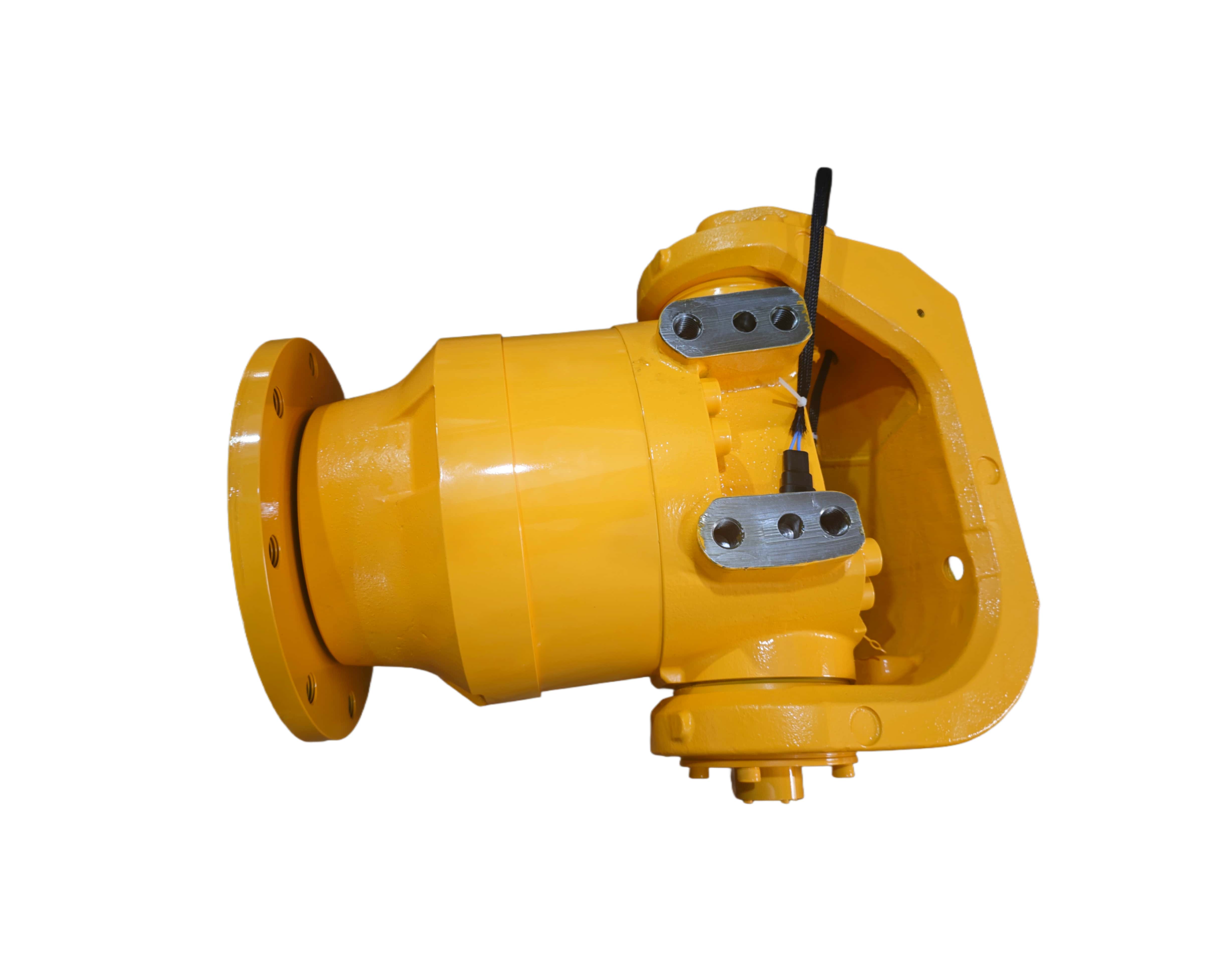
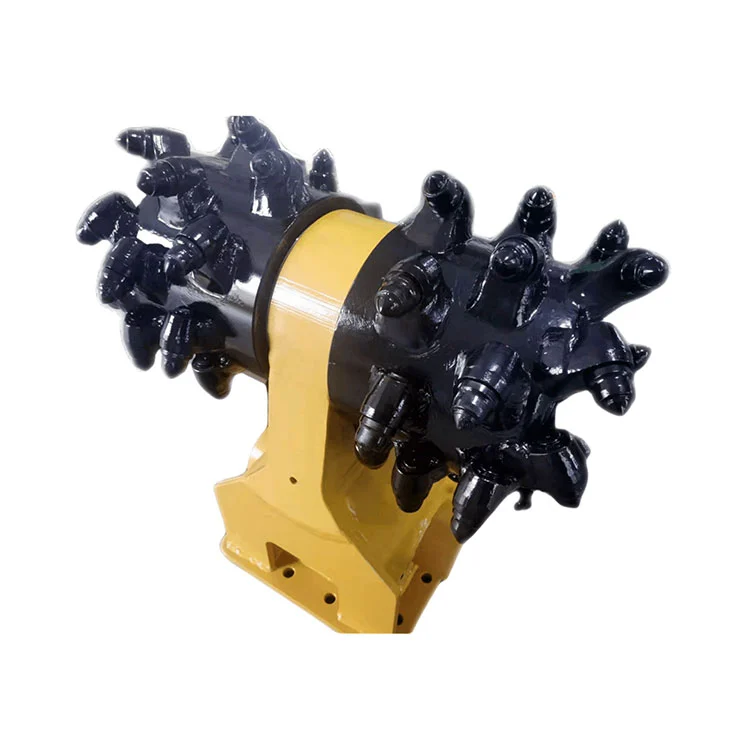
Zhongke Hydraulic Motor delivers reliable high torque for heavy-duty machines such as cotton pickers and road rollers amid tough muddy and sloped working conditions.When a cotton picker bogs down in wet fields or a road roller struggles on an incline, operators don't curse the battery. They curse the lack of torque. Electric motors have their place—in fans, pumps, and light-duty conveyor belts. But for heavy-duty mobile equipment that works in mud, dust, and continuous shock loads, the industry keeps coming back to one solution: the hydraulic motor.
Let's start with a simple fact: Electric motors produce maximum torque at zero speed. That sounds perfect for heavy equipment. But here's the catch—they also draw maximum current at that same moment. In a battery-powered mobile machine, that means oversized cables, heavy controllers, and heat buildup that requires active cooling.
A motor, by contrast, delivers constant torque across a wide speed range without needing a gearbox the size of a suitcase. More importantly, it can hold that torque at stall indefinitely without burning out. Try that with an electric motor on a monorail hoist holding a two-ton load halfway up a shaft.
Example from the field: A scraper conveyor in an underground coal mine needs to start and stop under full load dozens of times per shift. Electric motors require soft starters and thermal protection relays.
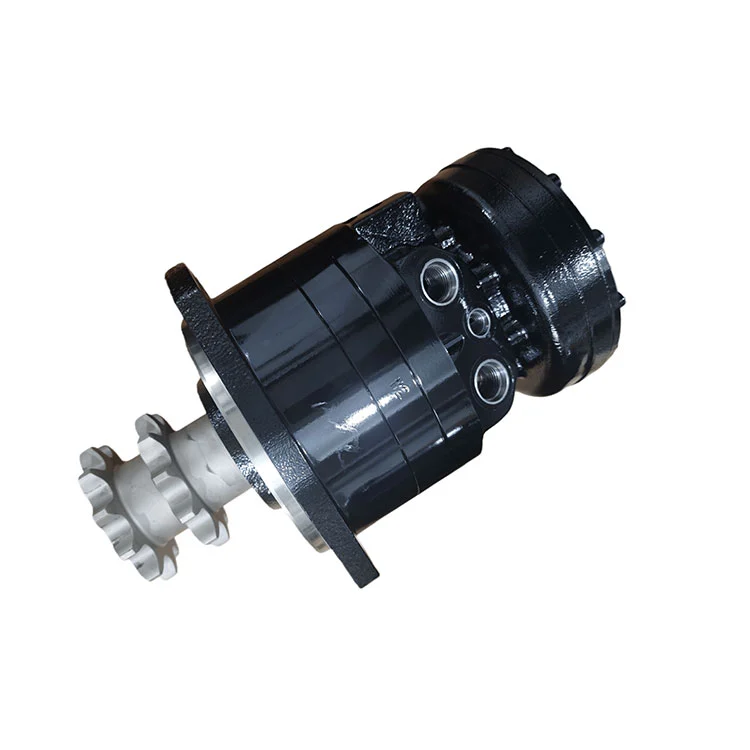
Let's compare them side by side. This table shows what happens in real heavy-duty mobile conditions—not lab tests.
| Condition | Electric Motor | Hydraulic Motor |
| Continuous stall torque | Requires active cooling, risks burnout | No problem, fluid carries heat away |
| Operation in mud/water | Sealing becomes complex and costly | Simple shaft seals, IP rating easily achieved |
| Shock loads (rock breaking, milling) | Gears or couplings fail first | Radial piston design absorbs shock |
| Multiple actuators on one machine | Needs one motor + drive per function | One pump can run several motors |
| Cold weather starting | Battery capacity drops 30-40% | Oil warms up quickly under load |
| Overload protection | Electronic current limit or fuse | Built-in pressure relief valve |
A road roller vibrating asphalt for eight hours straight will overheat a large electric motor's windings. It simply routes hot oil back to the tank, through a cooler, and keeps running.
Nobody doubts that electric drives reduce local emissions. But for heavy mobile equipment—tunneling machines, mining excavators, forestry harvesters—the total cost of operation tells a different story.
Consider a 20-ton hydraulic drum cutter mounted on an excavator. It chews through rock for ten hours a day. An electric equivalent would need:
- A 300+ kWh battery pack (costing more than the cutter)
- A liquid cooling system for the motor and controller
- Reinforced chassis to carry all that weight
- Two hours of downtime for charging (or a second machine as backup)
The hydraulic version? It connects directly to the host machine's existing hydraulic system. No extra batteries. No chargers. No weight penalty.
"We tested an electric drive on a small milling attachment," said one equipment rental manager. "The battery lasted 90 minutes. Our customers returned it the same day."
Let's look at three machines where switching to electric would be a downgrade.
A skid steer runs augers, planers, and sweepers. Every attachment needs hydraulic flow. If you replace the main drive with an electric motor, you still need a hydraulic power unit for the attachments. Now you have two systems: electric drive + hydraulic implement pump. That's more complexity, not less.
A single diesel engine driving a hydraulic pump powers both traction and attachments. And the hydraulic motor on each wheel provides individual speed control for true skid steering—something electric motors can do only with four independent drives and complex software.
Cotton harvesters run 24 hours during peak season. Electric motors would need midday fast-charging—impossible in a remote field. Worse, the dust and lint from cotton quickly clogs electric motor cooling fans. It has no cooling fans. They reject heat through the oil, which also lubricates internal parts.
A monorail hoist in a coal mine carries heavy loads along an overhead rail. The motor must brake safely, hold the load without creeping, and restart under full torque. Electric motors need separate brakes and complex vector drives to achieve this. It with a multi-disc brake does it all in one compact package.
Mine operators often tell us: "An electric motor on a monorail is a problem waiting to happen. Hydraulic is simple, reliable, and easy to repair underground."
Some people claim it require more maintenance than electric motors. Let's check the facts.
Electric motor maintenance items:
- Bearing lubrication (every 2,000–4,000 hours)
- Insulation resistance testing (annual)
- Cooling fan cleaning (weekly in dusty environments)
- Capacitor replacement (for single-phase, every 3–5 years)
- Controller software updates and parameter checks
Hydraulic motor maintenance items:
- Shaft seal inspection (annual)
- Housing bolt torque check (after first 100 hours, then annually)
- Flushing if contamination occurs (rare with proper filtration)
In practice, most of It failures come from contaminated oil—which is a system problem, not a motor problem. Keep your filters clean and change oil on schedule, and a radial piston motor outlasts the machine it's bolted to.
In fact, many HMS series motors from Ningbo Helm Tower Hydraulic Co., Ltd. are still running after 15 years in forestry equipment—with nothing but seal replacements.
Here's a powerful advantage: A single hydraulic pump can power multiple motors, cylinders, and rotary actuators simultaneously. Electric drives need a separate motor, controller, and cables for each motion axis.
Imagine a tunneling machine with:
- Cutterhead rotation
- Thrust cylinders
- Segment erector rotation and gripping
- Conveyor drive
- Dust suppression fan
That's five or six independent functions. With electric drives, you'd have five or six motors, five or six controllers, and complex coordination software. With hydraulics: one pump, one valve bank, and as many motors as you need.
The HMCR series is a perfect example. It's designed for wheel drives on compact loaders but can also run winches, mixers, and augers from the same hydraulic source.
Ask any equipment operator in North Dakota or Siberia about electric motors in winter. They'll laugh—or cry. Lithium-ion batteries lose 30–50% of their capacity at -20°C. Electric motor bearings get stiff. Controllers act erratically.
A hydraulic motor? It runs on oil. Cold oil is thick, but once the machine warms up (usually in 5–10 minutes of light operation), the motor performs exactly as it does in summer. And here's a trick: Run the hydraulic system against a relief valve for 30 seconds. The oil heats up fast.
No battery heaters. No insulation blankets. No range anxiety.
Electric motors are quieter at idle. That's true. But under heavy load, the dominant noise often comes from the driven equipment—a milling head on rock, a vibrating roller on asphalt, a scraper chain on coal.
In fact, some operators prefer it because the noise is lower-pitched (pump pulsations) compared to the high-pitched whine of an electric motor at high RPM. Low-frequency noise travels less and is less annoying over a 12-hour shift.
A properly designed hydraulic system with a radial piston motor runs surprisingly quiet. The HMK series, for instance, uses a cam ring design that reduces flow ripple—a major source of hydraulic noise.
Why do major equipment builders like XCMG, Sany, and Zoomlion continue to specify the product for their newest heavy equipment lines? Because their customers demand reliability, not theoretical efficiency.
One Chinese tunneling machine operator tested an electric auxiliary drive on a conveyor. It failed after 400 hours due to dust ingress.
An American skid steer attachment maker tried to design an electric auger drive. It weighed 30% more and cost 50% more than the hydraulic version. They abandoned the project.
These aren't opinions. They are real-world outcomes.
Eventually, battery energy density will improve. Charging infrastructure will expand. Electric motors will get cheaper controllers and better thermal management.
But for heavy-duty mobile equipment that works in remote locations, under continuous shock loads, and in extreme temperatures, it is not going away.
Until batteries become five times lighter and ten times cheaper, heavy equipment will keep using hydraulic drives.
Choosing between electric and hydraulic isn't about technology fashion. It's about matching the drive to the duty cycle. For stationary pumps, fans, and light conveyors, electric motors are excellent. For skid steer loaders, cotton pickers, road rollers, tunneling machines, and monorail hoists—machines that face shock, stall, dust, and long hours—hydraulic motors remain the proven solution.
The radial piston design, particularly from specialized teams like that at Ningbo Helm Tower Hydraulic Co., Ltd., offers compact power, simple maintenance, and brutal reliability. Their HMS, HMCR, HMK, HP, HMG, and HMF series motors are built for exactly these conditions: low speed, high torque, and no excuses.